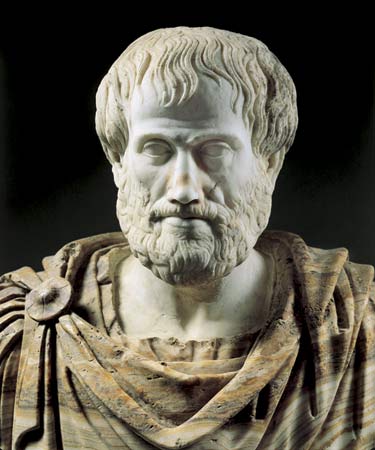
Plain and simple, the best place to begin on pilgrimage is the ancient world of philosophy. After all, friendship is a concept for the Christians and pagans! The concept of proper virtue and balance was always present in the ancient world, so it is only natural that Aristotle would take on an analysis of a virtuous [pagan] friendship.
The first chapter of his first book on friendship, Book VIII of the Nichomachean Ethics, is happily titled before the current task at hand: "Why we need friendship." It is here that a man who does not take universals lightly lays down a bold precept of human nature: "No one would choose to live without friends." Perhaps it can be qualified that no one in his right mind and in a virtuous state would choose to live without friends. He says in a very straightforward way that not even the man who has been given all the riches in the world would desire to live without friends. This is more than just a simple s
tatement or a proposition, it is a proof. Here, Aristotle offers his reader a chance to place himself in the situation. Namely, he asks the reader, if you had everything in the world, how much would it mean if you did not have friends with whom you could share? This concept will be expanded upon by Aelred of Rievaulx who comes in a medieval period.
Aristotle also says: "In poverty and all other kinds of misfortune, men believe that their only refuge consists in their friends." This is a very important concept to be understood precisely, for this is the basis for man's friendship with
Christ and how it is to be understood. Robert Hugh Benson, an author of the early 1900's expands upon this point specifically in his book: The Friendship of Christ which will be discussed later on in the pilgrimage. For now, though, this concept means exactly what it says. When man is left with nothing and the greatest tragedies have befallen him, he has a natural tendency to pursue his friends for understanding and consolation. In the same way, this concept points to Christ in that when we realize that we have nothing, we find that there is a natural inclination or longing identifiable with our very selves for something or someone greater. This Someone is none other than Christ and this c
oncept of Aristotle's marks an interesting tendency for the ancients to act as a natural prelude to the supernatural crescendo.
Furthermore, it would be uncharacteristic
of Aristotle to not mark the philosophical value of friendship: "friends enhance out ability to think and act." In line with the ancient Irish proverb, "the eye of a friend is a good mirror," Aristotle points out the importance of friends in terms of self reflection and self knowledge.

A final observation of this basic explanation deals with Aristotle's distinction between two types of friendships: those based on pleasure, and those based on who the people are. Basically, there is a type of friendship based on a certain factor of usefulness or enjoyment. This friendship lasts only as long as one friend can provide the other with some sort of gratification. As age increases and time progresses, these friendships must either fade away or become friendships based on who the people are. The latter type of friendship can grow out of a friendship based in pleasure. This species of friendship consists in the sharing of what one has and who one is regardless of pleasure or pain. It is with this latter friendship that we are principally concerned, and it is with this friendship we will continue in pilgrimage to the next author: Aelred of Rievaulx.